India forces caller-ID apps to feed spam reports to telcos
Published
What's this about?
Truecaller says the one-way sharing requirement would hand a commercially valuable proprietary asset to telecom operators.
The one-panel cartoon
Read the cartoon's script
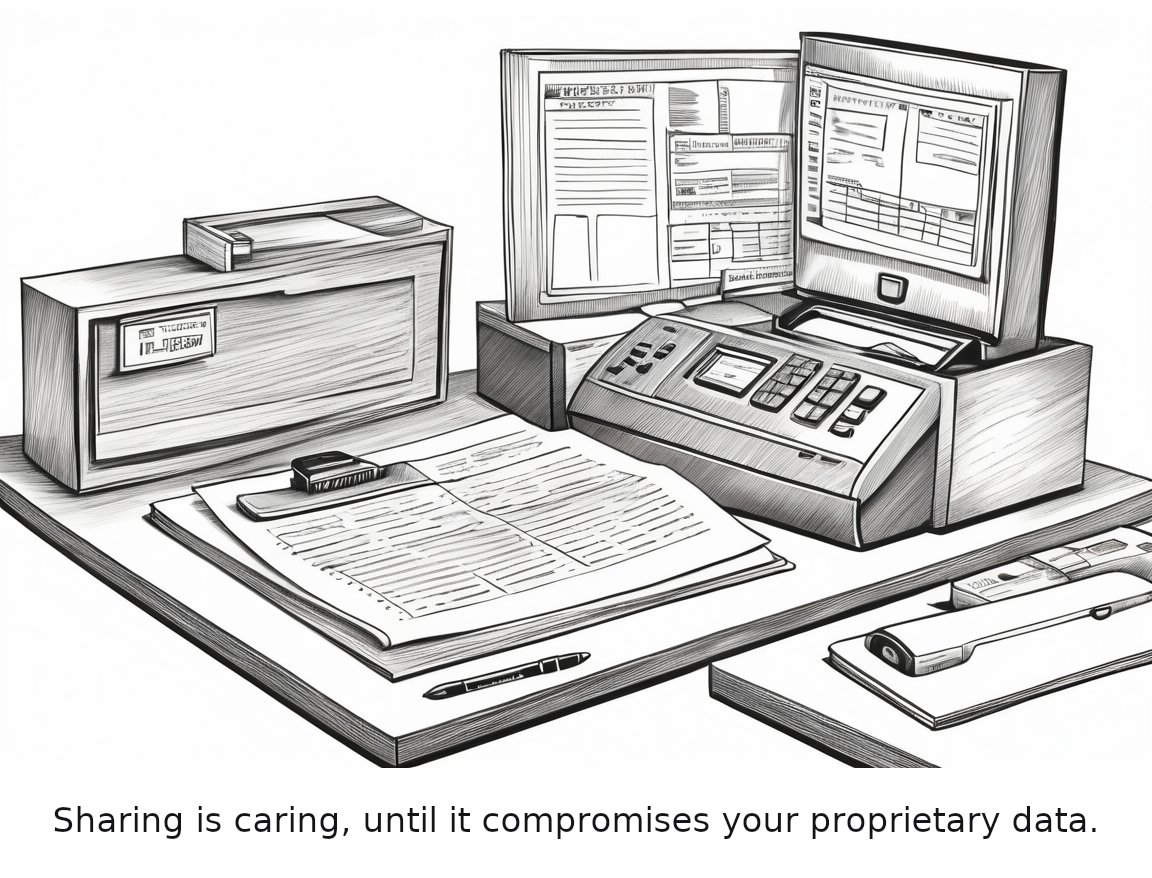
A cluttered office desk with a smartphone displaying a caller-ID app interface, beside it lies a stack of privacy policies and telecom company contracts.
Caption: Sharing is caring, until it compromises your proprietary data.
Read the full 3-panel strip
Based on the original story on techcrunch.com.
Editor's note
This move by India to require caller-ID apps to share spam reports with telcos raises concerns about handing over a valuable asset to the very companies the apps are designed to monitor. It’s a move that could compromise user privacy and reduce the effectiveness of these apps in curbing spam, as the apps might not have the autonomy to report false positives.
Rate this comic
Read the script
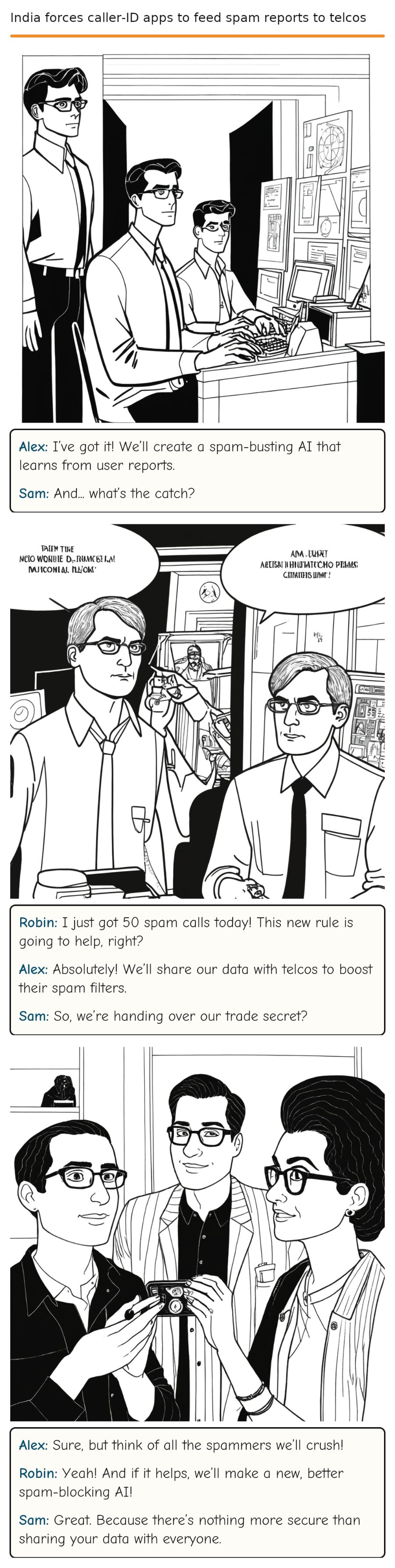
Panel 1
*Alex is sitting at a desk surrounded by glowing screens and diagrams. Sam is standing behind him, looking skeptical.*
Alex: I’ve got it! We’ll create a spam-busting AI that learns from user reports.
Sam: And... what’s the catch?
Panel 2
*Robin storms into the room, holding a phone with the screen full of spam calls.*
Robin: I just got 50 spam calls today! This new rule is going to help, right?
Alex: Absolutely! We’ll share our data with telcos to boost their spam filters.
Sam: So, we’re handing over our trade secret?
Panel 3
*Alex and Sam are looking at each other, while Robin is excitedly nodding and checking her phone.*
Alex: Sure, but think of all the spammers we’ll crush!
Robin: Yeah! And if it helps, we’ll make a new, better spam-blocking AI!
Sam: Great. Because there’s nothing more secure than sharing your data with everyone.
Comments