India forces caller-ID apps to feed spam reports to telcos
Published
What's this about?
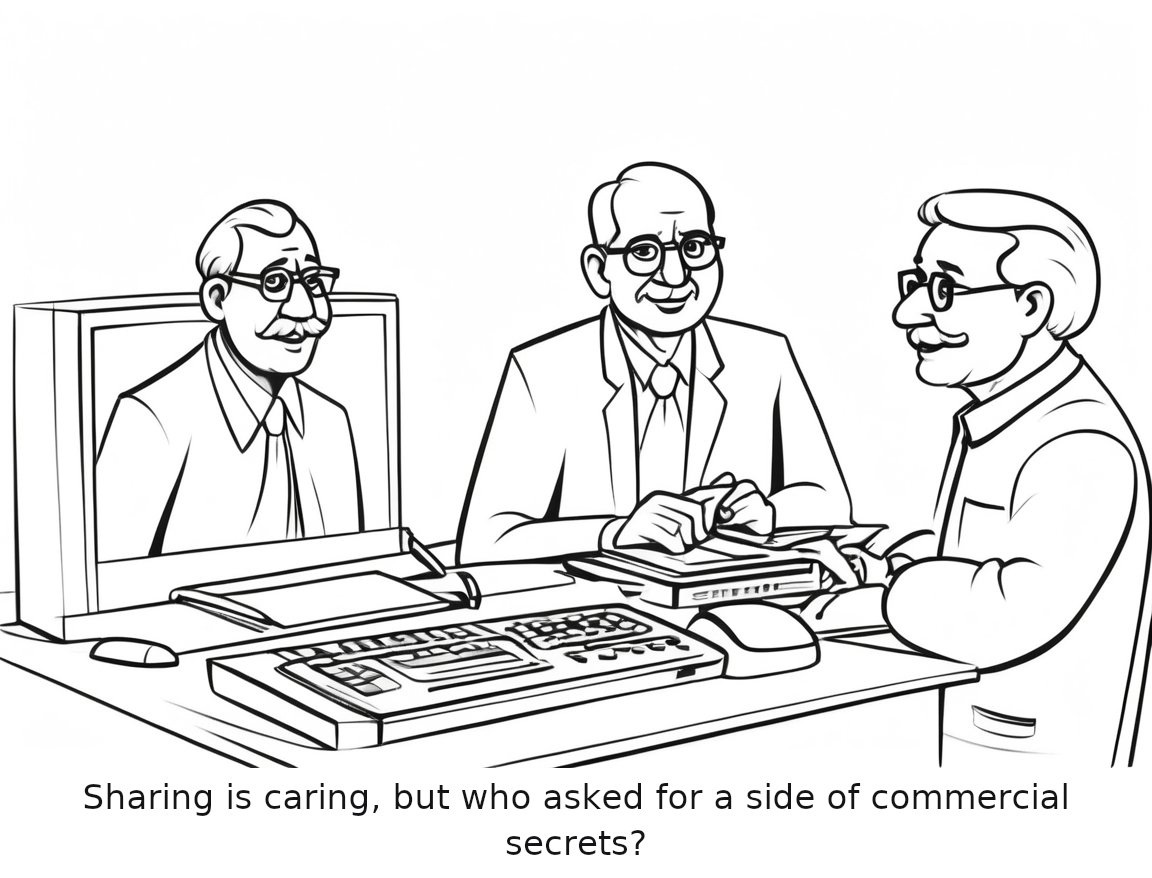
Truecaller says the one-way sharing requirement would hand a commercially valuable proprietary asset to telecom operators.
The one-panel cartoon
Read the cartoon's script
A cluttered office desk with a smartphone and a stack of call logs, a telecom operator's employee looking at a computer screen displaying proprietary caller-ID data.
Caption: Sharing is caring, but who asked for a side of commercial secrets?
Read the full 3-panel strip
Based on the original story on techcrunch.com.
Editor's note
This policy move by Indian authorities towards forcing caller-ID apps to share spam reports with telcos could undermine the privacy and control users have over their data. By allowing telecom operators to access this potentially valuable feedback, it could shift power dynamics and compromise user trust in these apps.
Rate this comic
Read the script
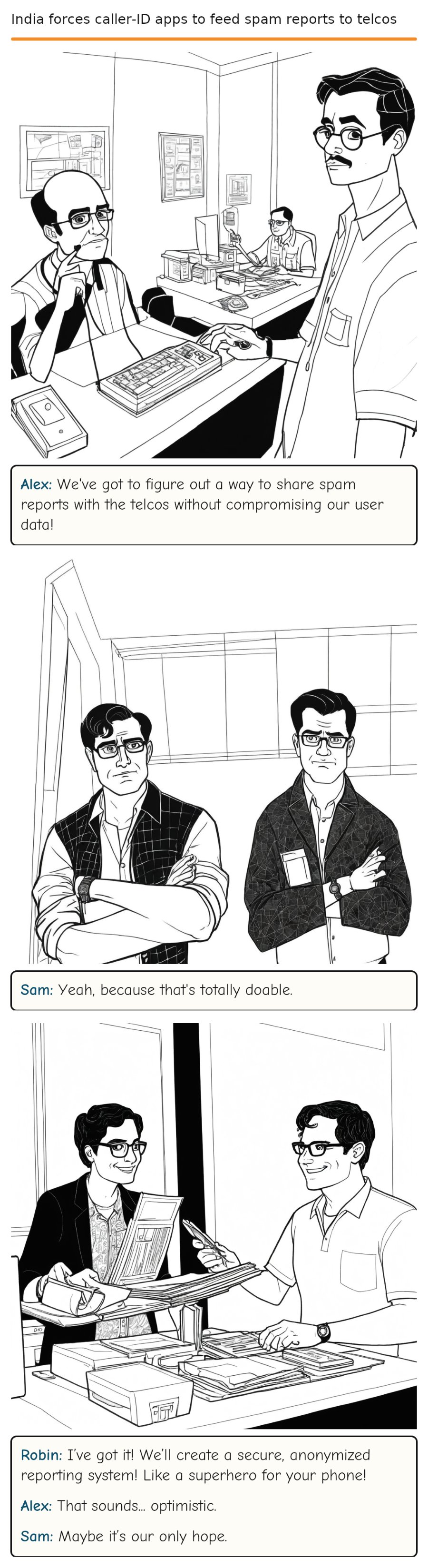
Panel 1
Alex is sitting at his cluttered desk, surrounded by computer screens and wires. He’s pointing at a piece of paper with a diagram on it.
Alex: We've got to figure out a way to share spam reports with the telcos without compromising our user data!
Panel 2
Sam is leaning against the wall, arms crossed, looking at Alex skeptically.
Sam: Yeah, because that's totally doable.
Panel 3
Robin bursts into the room, holding a stack of papers and a tablet. Alex and Sam exchange a doubtful look but smile.
Robin: I’ve got it! We’ll create a secure, anonymized reporting system! Like a superhero for your phone!
Alex: That sounds... optimistic.
Sam: Maybe it’s our only hope.
Comments