Researchers work out how to control 2D semiconductor growth for future chips
Published
What's this about?
Korean boffins use oxygen to stop crystals forming in the wrong places, aiming to get tech to commercial sector by 2030
The one-panel cartoon
Read the cartoon's script
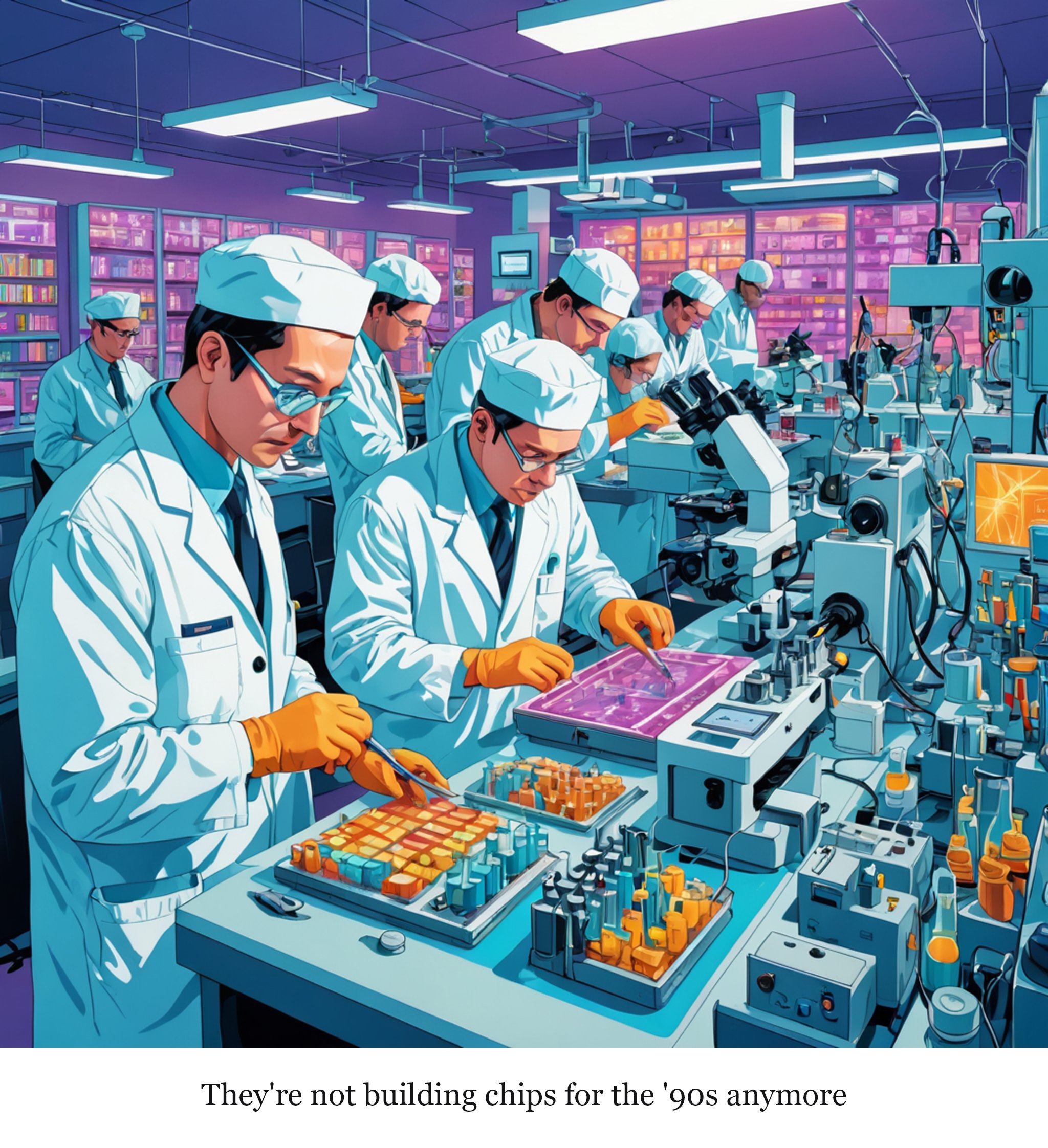
A high-tech semiconductor lab with rows of gleaming machines and scientists in white coats meticulously examining delicate chips under microscopes.
Caption: They're not building chips for the '90s anymore
Read the full 3-panel strip
Based on the original story on theregister.com.
Editor's note
This breakthrough in semiconductor growth highlights the importance of investing in research and development to drive technological progress and maintain competitiveness in the global tech sector. However, it's crucial to ensure that the benefits of such innovations are accessible to all, avoiding a future where advanced technologies exacerbate existing economic disparities.
Rate this comic
Read the script
Panel 1
(a) What the subject is: The story is about researchers in Korea who have developed a method to control the growth of 2D semiconductors, which are crucial for making advanced chips for electronics and computing. (b) The real irony or absurdity: The irony lies in the precision required to control crystal formation at an atomic level, while simultaneously acknowledging the distant timeline (2030) for commercialization. The contrast between the meticulous control and the long wait for practical applications highlights the disconnect between scientific breakthroughs and their real-world impact. (c) The single funniest observation: The highlight will be a humorous reflection on the patience required for technological advancements when the breakthrough is already years away from practical use.
Panel 2
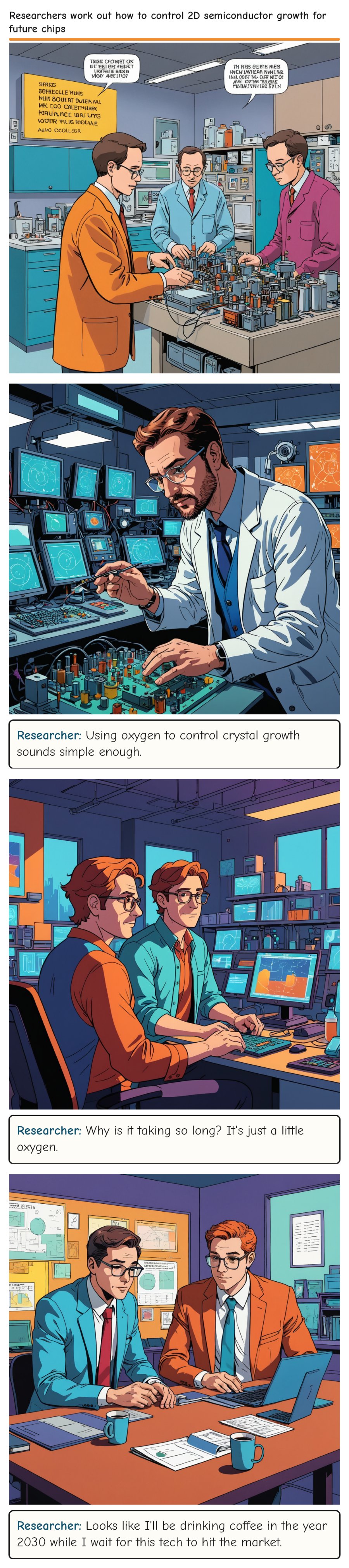
*Setting: A high-tech lab with researchers hunched over microscopes and computer screens, surrounded by tubes and test equipment. The lead researcher, wearing a lab coat and goggles, is carefully adjusting a device that controls oxygen flow.* *Researcher (voice-over, dryly):*
Researcher: Using oxygen to control crystal growth sounds simple enough.
Panel 3
*Setting: Same lab, but a few hours later. The researcher is now pacing around the lab, checking data on tablets and looking increasingly frustrated as the results don't materialize instantly.* *Researcher (to self, exasperated):*
Researcher: Why is it taking so long? It's just a little oxygen.
Panel 4
*Setting: A coffee shop, with the researcher sitting at a table, staring at a large calendar pinned to the wall that shows the year 2030. The researcher looks both relieved and resigned.* *Researcher (to self, resignedly):*
Researcher: Looks like I'll be drinking coffee in the year 2030 while I wait for this tech to hit the market.
Comments