UK to invest £100m in 'world first' AI Biosecurity Lab
Published
What's this about?
The chancellor will unveil AI spending aimed at shoring up the UK's defences in Wednesday's Budget.
The one-panel cartoon
Read the cartoon's script
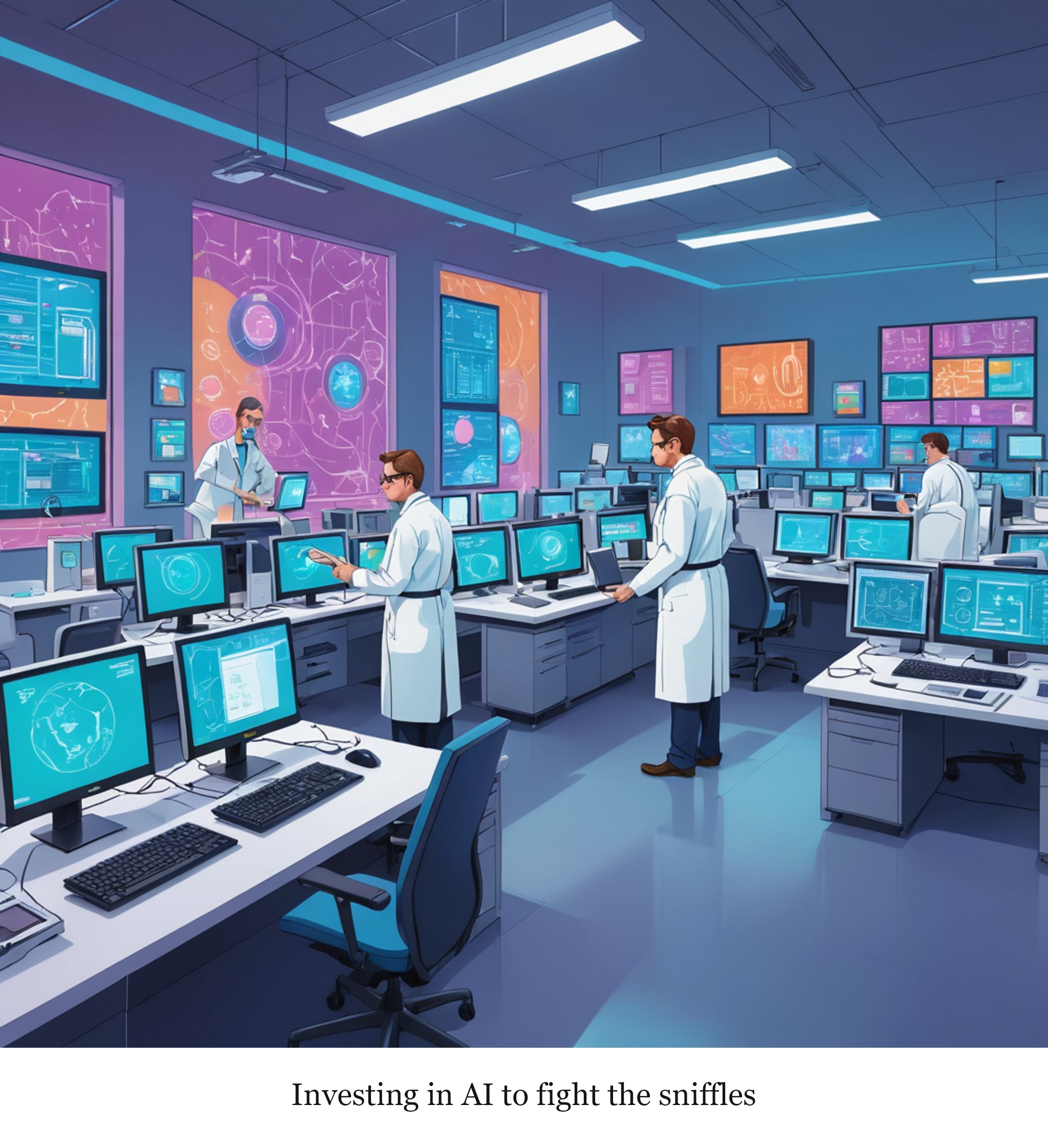
A sterile, high-tech laboratory with rows of computers and screens displaying complex algorithms, where a lone scientist in a white coat is frantically typing on a keyboard next to a petri dish labeled 'Common Cold'.
Caption: Investing in AI to fight the sniffles
Read the full 3-panel strip
Based on the original story on bbc.co.uk.
Editor's note
Investing £100m in AI for biosecurity sounds like a cutting-edge move, but let's not get carried away by the hype. While AI can certainly enhance our ability to predict and respond to biological threats, the real challenge lies in translating all that smart tech into practical, everyday safeguards that keep us safe.
Rate this comic
Read the script
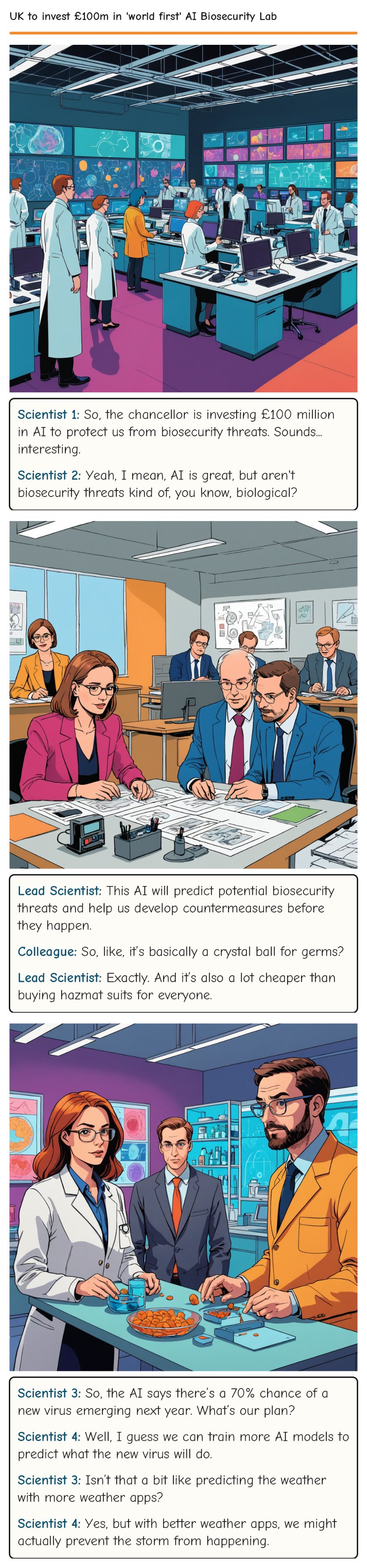
Panel 1
A high-tech lab with rows of computer servers and scientists in lab coats. The scientists are huddled around a large screen displaying complex AI algorithms.
Scientist 1: So, the chancellor is investing £100 million in AI to protect us from biosecurity threats. Sounds... interesting.
Scientist 2: Yeah, I mean, AI is great, but aren't biosecurity threats kind of, you know, biological?
Panel 2
The same lab, but now the scientists are in a meeting room with a large table and a projector. A few pages of technical notes are scattered around. The lead scientist is explaining something to a less technical colleague.
Lead Scientist: This AI will predict potential biosecurity threats and help us develop countermeasures before they happen.
Colleague: So, like, it’s basically a crystal ball for germs?
Lead Scientist: Exactly. And it’s also a lot cheaper than buying hazmat suits for everyone.
Panel 3
Back in the lab, the scientists are now staring at a screen displaying various AI models. One scientist is holding a petri dish with a confused look on their face.
Scientist 3: So, the AI says there’s a 70% chance of a new virus emerging next year. What’s our plan?
Scientist 4: Well, I guess we can train more AI models to predict what the new virus will do.
Scientist 3: Isn’t that a bit like predicting the weather with more weather apps?
Scientist 4: Yes, but with better weather apps, we might actually prevent the storm from happening.
Comments