Why OLPC’s $100 laptop never stood a chance
Published
What's this about?
The idea was big, exciting, and inspiring: What if we could get every kid in the world access to a computer? For a bunch of thinkers and executives in Silicon Valley, it felt like the way to fix everything. But the One Laptop Per Child initiative, and the XO-1 laptop designed to be given away, […]
The one-panel cartoon
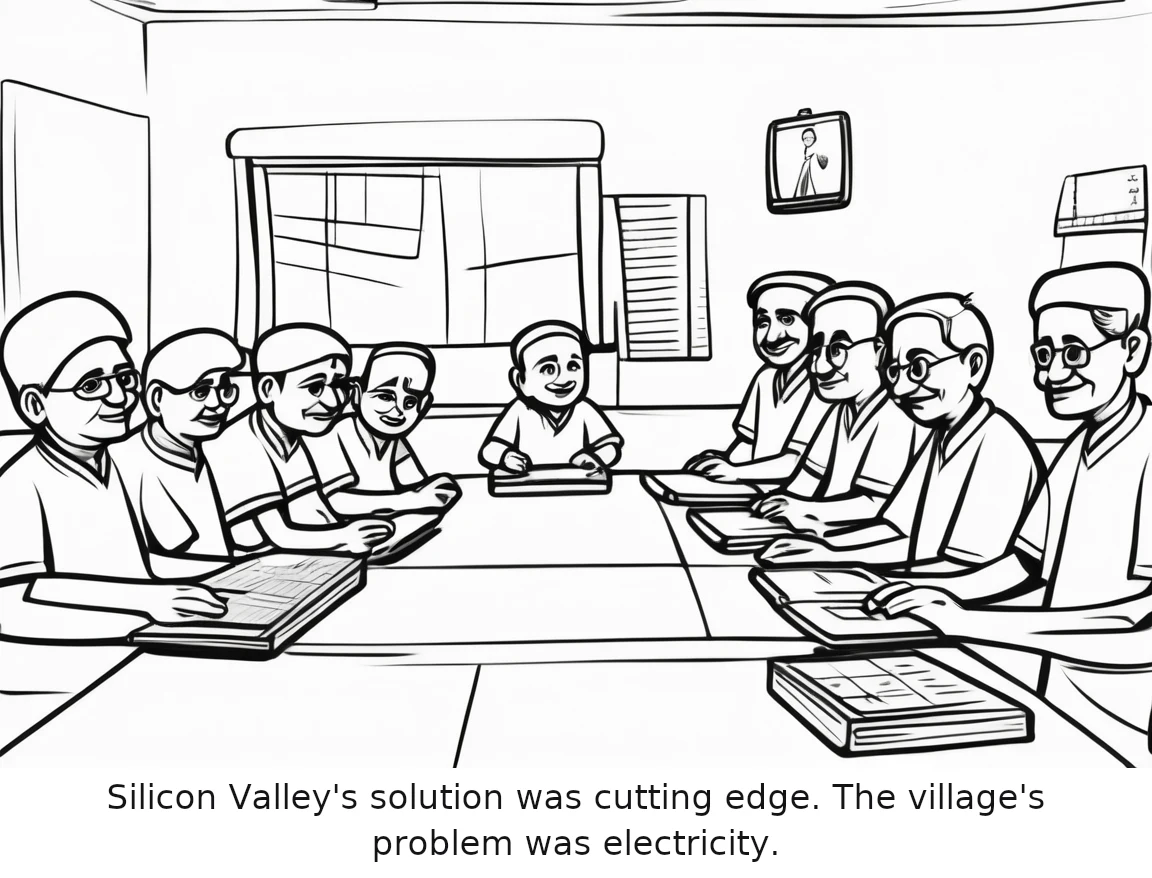
Read the cartoon's script
A dusty classroom in a remote village, filled with eager children and a single old-fashioned blackboard, while an OLPC laptop gathers dust on a desk in the corner, disconnected from a power source.
Caption: Silicon Valley's solution was cutting edge. The village's problem was electricity.
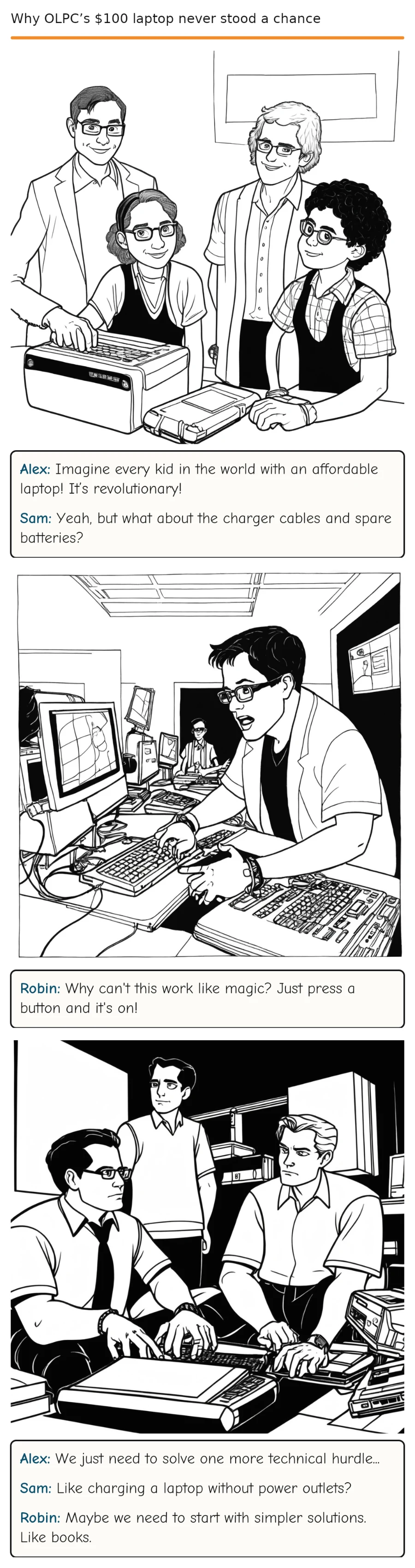
Read the full 3-panel strip
Based on the original story on theverge.com.
Editor's note
The OLPC initiative, with its vision of giving every child a computer, was a noble idea with deep potential. However, the reality on the ground revealed that who actually benefits from such a program is more complex than its creators anticipated, highlighting the importance of considering who gets left behind and ensuring equitable access to technology.
Rate this comic
Read the script
Panel 1
*A sunny classroom in a developing country. Alex, holding a prototype laptop, is beaming with enthusiasm. Sam stands nearby, looking skeptical.* Sam (deadpan)
Alex: Imagine every kid in the world with an affordable laptop! It’s revolutionary!
Sam: Yeah, but what about the charger cables and spare batteries?
Panel 2
*The same classroom, but now chaos reigns. Robin is frantically trying to plug in several laptops, wires tangled everywhere.* Robin (yelling)
Robin: Why can't this work like magic? Just press a button and it's on!
Panel 3
*Alex and Sam are sitting on the floor, surrounded by scattered laptop parts and manuals. Robin is pacing, frustrated.* Sam (looking at Robin) Robin (sighing) *All three share a moment of reflection.*
Alex: We just need to solve one more technical hurdle...
Sam: Like charging a laptop without power outlets?
Robin: Maybe we need to start with simpler solutions. Like books.
Comments