Federal judge calls Flock ‘indiscriminate mass surveillance’
Published
What's this about?
A federal judge ruled that a sheriff’s deputy violated a woman’s Fourth Amendment rights when using Flock to search for her license plate without a warrant.
The one-panel cartoon
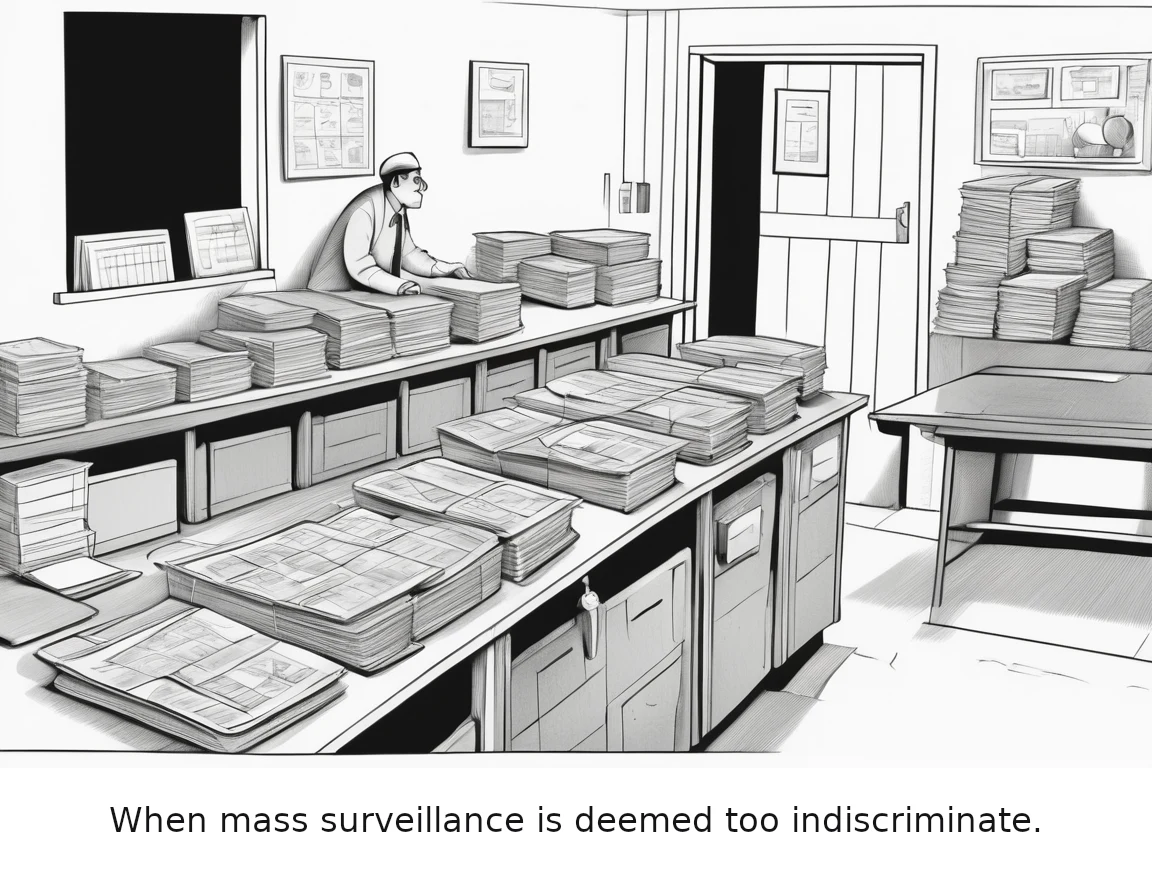
Read the cartoon's script
A dimly lit police station evidence room filled with old license plates, surveillance cameras, and a large chalkboard map with highlighted plate numbers, where a deputy is frantically searching for a specific plate among piles of paperwork.
Caption: When mass surveillance is deemed too indiscriminate.
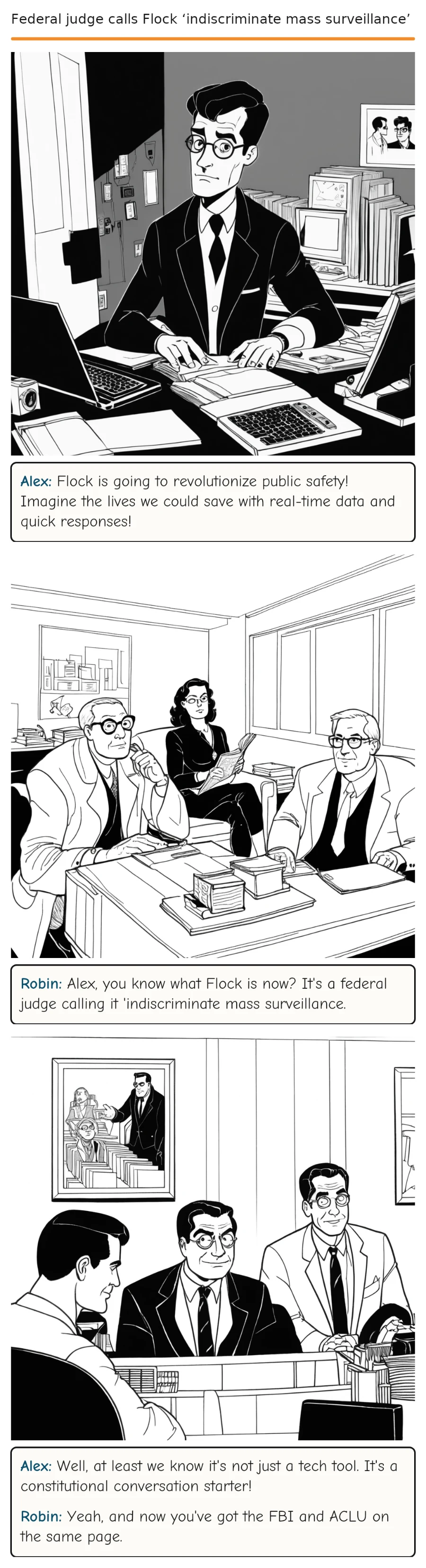
Read the full 3-panel strip
Based on the original story on techcrunch.com.
Editor's note
This ruling underscores the critical need to protect individual privacy from invasive surveillance, especially when wielded without legal justification. It highlights the risks faced by all when law enforcement oversteps its bounds, disproportionately affecting marginalized communities who are often the targets of such indiscriminate monitoring.
Rate this comic
Read the script
Panel 1
*Setting: Alex's cluttered home office, with a computer screen displaying an open-source code editor and a stack of technical books.* Alex (typing away, head buried in a book)
Alex: Flock is going to revolutionize public safety! Imagine the lives we could save with real-time data and quick responses!
Panel 2
*Setting: Alex's office, now with Robin lounging on a bean bag chair, flipping through a magazine with a skeptical look.* Robin (sighing loudly)
Robin: Alex, you know what Flock is now? It's a federal judge calling it 'indiscriminate mass surveillance.
Panel 3
*Setting: Alex’s office, with Alex sitting back in a chair, staring at the ceiling, while Robin looks at Alex with a smirk.* Alex (slowly, with a mix of despair and humor) Robin (grinning)
Alex: Well, at least we know it's not just a tech tool. It's a constitutional conversation starter!
Robin: Yeah, and now you've got the FBI and ACLU on the same page.
Comments